When you decide to make a picture book for a child, the words are only half the project. The illustrations are what make a story feel alive, and they also take real time to get right. Knowing what the illustration process involves helps you set a schedule you can actually keep, even if you are still deciding who will create the art.
What does the illustration workflow actually look like?
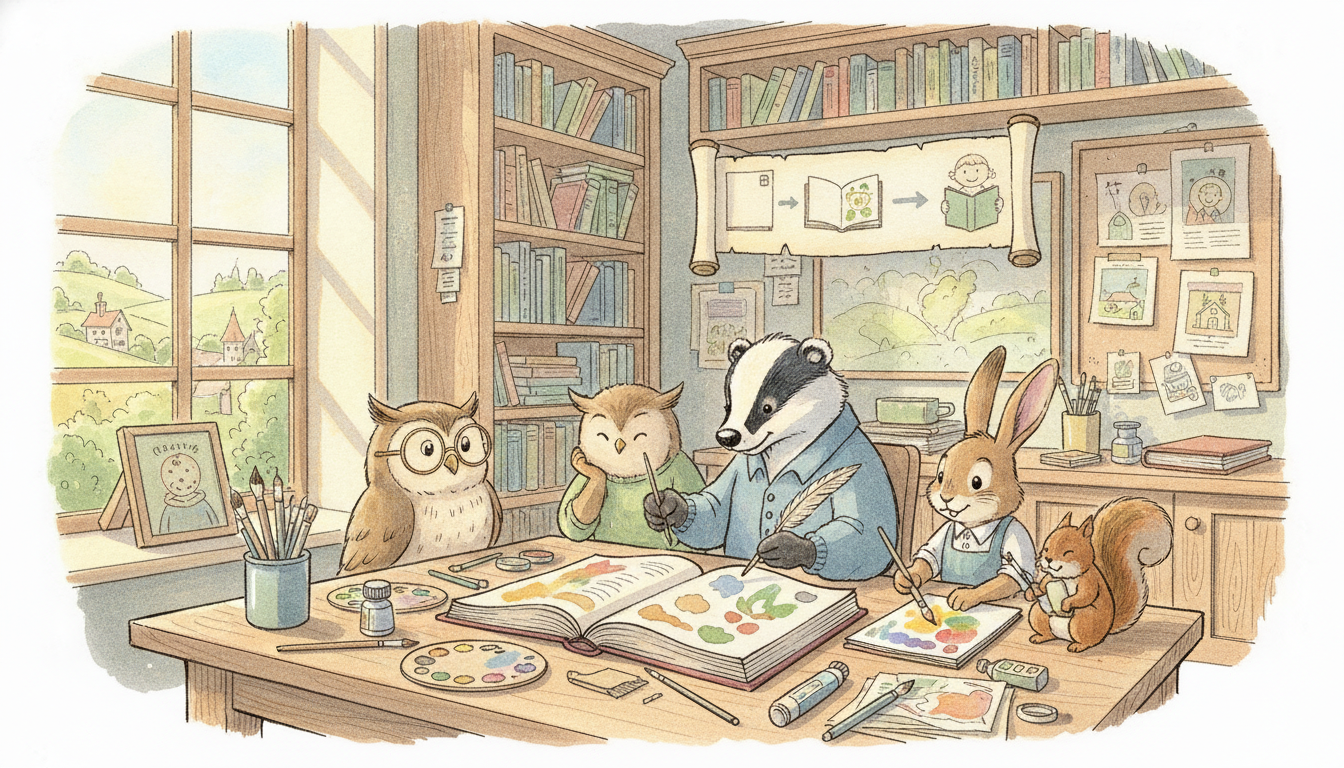
The workflow starts with rough thumbnails, moves to detailed pencil sketches, and finishes with color and texture. You first map out each spread in tiny drawings to see where text and images will sit. Once the layout feels right, you redraw each page at full size, then ink or paint the final art. Thumbnails are quick and messy on purpose. They let you test different compositions without wasting hours on a page that does not work. Detailed sketches are where you work out expressions, poses, and the background for each scene. The final stage is where the book gains its mood, through color palettes, shading, and small finishing touches. For a 32-page picture book, that means roughly fifteen to sixteen full spreads that each need this full treatment. Knowing these stages in advance keeps you from expecting finished art after the first week.
How long does each illustration stage take?
Thumbnailing usually takes a few hours for a whole book. Detailed sketching runs one to three days depending on how complex the scenes are, and inking plus coloring often takes a week to two weeks. So a single illustrator might spend two to four weeks on a complete book, not counting time for feedback or revisions. The exact time depends on the art style. A loose watercolor look can move faster than highly detailed digital painting. Character-heavy spreads with lots of background detail will take longer than simple scenes with one child and a dog. If you are working with an illustrator, ask for their estimate in hours per spread rather than just a flat price. That makes it easier to understand where the days go and what you can adjust if you need a faster turnaround.
What speeds up or slows down the illustration process?
Using a consistent character design from the start is the biggest time-saver, because it prevents rework on every page. Working digitally with layers also cuts revision time, since you can change the background without redrawing the character. Waiting on feedback from beta readers or editors is the most common slowdown, since each round of notes can add days to the schedule. Another hidden delay is indecision. Jumping between styles or redrawing the same character from a new angle can eat up a whole week. On the flip side, having a clear style reference sheet and an agreed color palette keeps the work moving. If you are creating the book yourself, keep the character design simple enough to repeat. A few distinctive features, like a red hat or round glasses, matter more than a complex outfit that has to be redrawn on every single page.
How do you set a realistic timeline for a children's book?
Block out time for each stage on a calendar, then add buffer days for unexpected changes. A realistic schedule might look like one week for thumbnail and sketch approval, two weeks for final art, and one extra week for revisions and fixes. That gives you about a month of illustration time for a typical picture book. If you are hiring an illustrator, build in extra time for email back-and-forth and scheduling. If you are doing it yourself, remember that your own life will interrupt the work. Set a milestone for each completed spread and celebrate it. Finishing a page or two per day feels much better than staring at an empty book. And when you do hit a snag, step away for a few hours instead of forcing it. A fresh look at a tricky spread usually solves the problem faster than grinding through it.
What tools can help you illustrate a children's book yourself?
If you want to create the illustrations without years of art training, there are now tools that handle part of the heavy lifting. A storybook studio like Fablekit lets you generate line sketches for inspiration, then refine them in a Character Studio. Each page has a Generate Sketch feature that creates the line art for you. When a sketch feels right, you take it into the Character Studio to build the final illustration using that sketch as a reference. You can keep the character grounded across pages, add or remove characters, and change the background. You can also choose the image format: 16:9 for a two-page spread, or 16:9 and 1:1 for single-page images. This makes it possible to finish a fully illustrated book in days rather than weeks, while still keeping the main character consistent from the first page to the last.
How do you keep the main character consistent across every page?
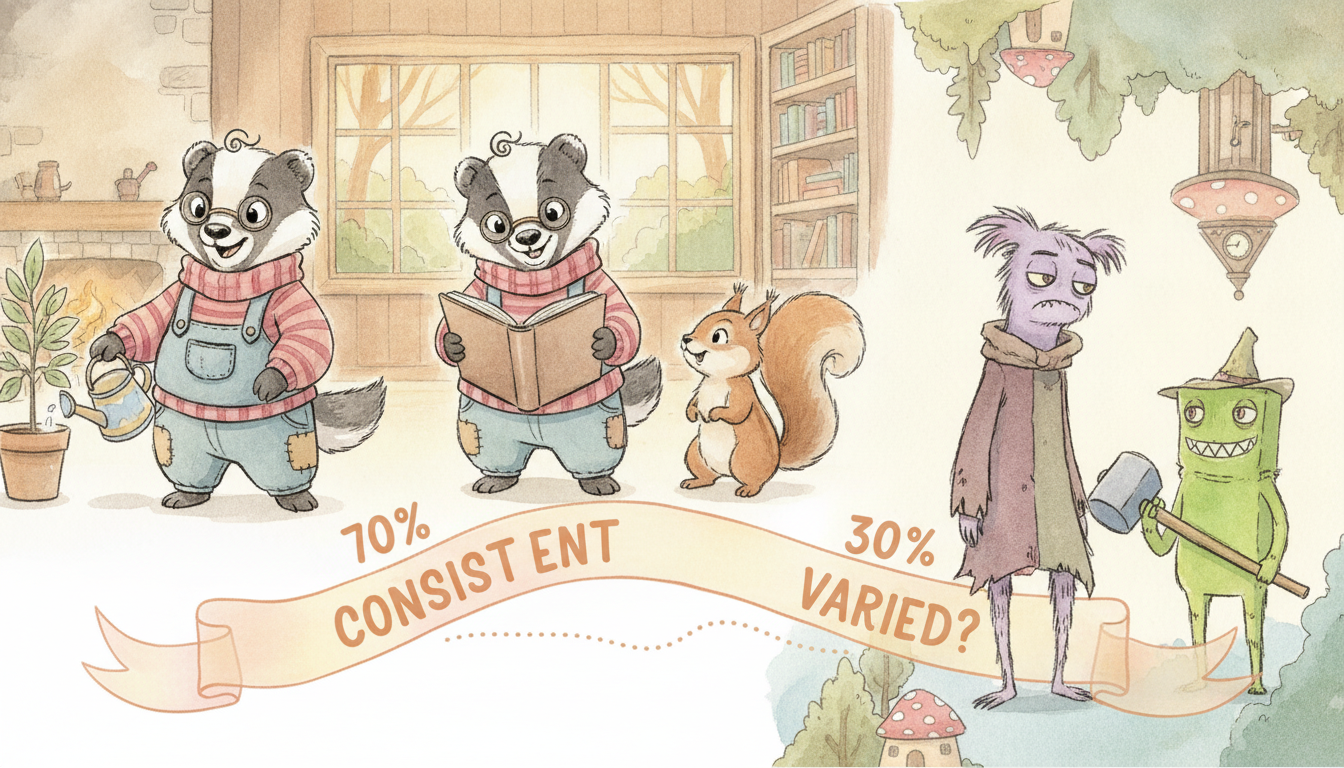
The simplest way is to create one character reference sheet and use it for every scene. Decide on the child's hair color, eye shape, outfit, and the basic proportions, then check your sketch against that sheet before you commit to final art. In digital tools, you can also reuse the same base character layer and adjust the pose or expression for each page. That is what keeps a storybook from feeling like a different child appears in every spread. When you use a tool like Fablekit, the Character Studio is built specifically to keep the character grounded across all illustrations. You can iterate on an image while the key features stay locked. The result is a book where the hero looks like the same kid on the playground, at the dinner table, and under the covers at bedtime.
Frequently Asked Questions
How long does it take to illustrate a children's book from scratch?
For a standard 32-page picture book, most illustrators need two to four weeks of focused work. That includes thumbnailing, sketching, inking, and coloring, but not waiting on feedback or major revisions. If you are working with an illustrator, ask for an hourly per-spread estimate to plan more precisely.
What is the fastest way to illustrate a children's book?
The fastest way is to keep a tight character reference sheet and work digitally with layers. Tools like Fablekit can generate line sketches and let you refine them in a Character Studio, which cuts out the slowest parts of the process. You can finish a book in days instead of weeks if you keep the style consistent.
How many illustrations are typically in a children's book?
A standard 32-page picture book usually has 14 to 16 full spreads that need illustration. Some pages may be text-only, and a few may have spot illustrations. The exact number depends on the manuscript and the layout you choose.
Do I need to be a good artist to illustrate a children's book?
No. With digital tools and AI-assisted sketch generators, you can create consistent, professional-looking illustrations without formal art training. The important skills are choosing a clear style, keeping the character consistent, and reviewing each page before you move on.